
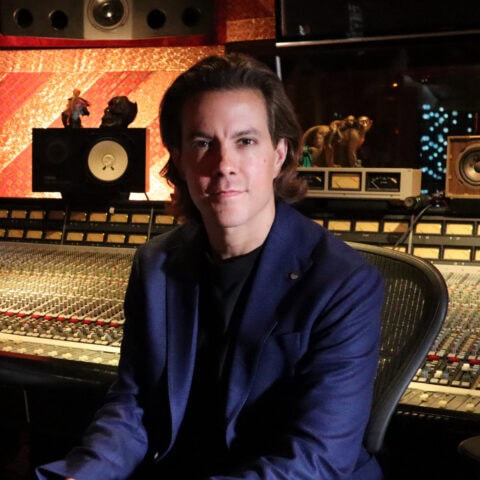
Describe your background and industry experience, and explain how it will help you contribute to the SOCAN Board of Directors?
I am a lifelong music creator: a songwriter, producer, and musician. For over twenty years I have built a professional career writing with artists, composing for film and television, and producing records. Like many of my peers, my livelihood has been shaped by the creative and business realities of making music, and I understand firsthand what it takes to sustain a career in today’s evolving ecosystem.
SOCAN has been central to that journey. It has been a lifeblood for me and countless fellow creators and must be preserved, protected, and strengthened. I believe deeply in collective management and in SOCAN’s essential role in ensuring music creators are fairly compensated for their work.
Today, the value of a song has been reduced to fractions of a cent, while generative artificial intelligence enables mass intellectual property exploitation on an industrial scale. In this environment, the deck can feel stacked against creators.
This moment demands strong collective management to represent creators’ interests, guided by informed, principled, and committed board leadership.
Alongside my creative career, I have developed extensive leadership, governance, and advocacy experience. I serve as President of the Songwriters Association of Canada, having previously served as a director. I also served as a director of the SOCAN Foundation, deepening my understanding of non-profit governance, fiduciary responsibility, and financial oversight.
As an advocate, I have testified before the CRTC and represented songwriters internationally at the World Intellectual Property Organization on issues related to broadcast, copyright, and artificial intelligence. I am committed to ensuring creators’ voices are heard at the highest levels.
Ultimately, I am motivated by a belief in copyright, collective management, and the foundational role of songwriters. I bring good judgment, curiosity, and a genuine passion for service, and would be honoured to contribute these skills and perspectives as a SOCAN director.
In your opinion, what issues will be most important to SOCAN members over the next three years?
Some of the most important issues for SOCAN members over the next three years will be fair remuneration, the protection and strengthening of copyright and cultural diversity in a rapidly evolving digital landscape, and the defending and expansion of collective management.
In today’s streaming economy, the issue of fair remuneration for music creators is of critical importance. Negotiating fair rates, ensuring accurate reporting and transparent data practices, and enforcement of rights across platforms (including new and emerging technologies) will be essential to protecting and growing members’ income.
Equally urgent is the impact of generative artificial intelligence. The large-scale, unlicensed ingestion of musical works and the creation of competing derivative content threaten to displace creators and undermine copyright. SOCAN must continue advocating for clear legal frameworks and meaningful compensation to safeguard songwriters’ livelihoods.
Additionally, broadcasting and cultural policy will continue to influence the creation and discoverability as well as the diversity and viability of Canadian music. Strong engagement with government and regulators will be critical to sustaining a vibrant and equitable music ecosystem.
Finally, the rise of direct licensing and other threats to collective management will present existential challenges. Protecting the value and relevance of collective licensing therefore remains vital.